On this page
Why Is Focusing at Home So Hard?What Does Remote Work Do to Your Attention?How Do You Structure a Remote Day with the Pomodoro Technique?How Do You Handle Slack and Meetings?Household Distractions: The Laundry ProblemEnding the Workday When Work Lives in Your HouseFrequently Asked QuestionsRun Tomorrow's First BlockRemote work handed you the quietest office of your career, and somehow the deep work disappeared. The fix isn't more discipline. It's structure. The Pomodoro Technique, 25 minutes of focused work followed by a 5-minute break, rebuilds the boundaries your home doesn't have. It decides when you work, when you check Slack, and when the laundry gets its turn.
Think about the trade you made. You dropped the commute, the open-plan noise, and the drive-by meetings. In exchange you got the fridge, the doorbell, a phone that never leaves arm's reach, and a workday with no natural edges. Nobody trained you for this. Remote work is a skill, and most of us got thrown into it without a manual.
Here's the shift that makes everything click: the office gave you walls. Walls decided where work happened and where it stopped. At home there are no walls between work and everything else, so you have to build them out of time instead. That's what this guide shows you how to do.
Key Takeaways
- The Pomodoro Technique replaces the structure an office used to provide: timed blocks decide when you work, break, and answer messages.
- Knowledge workers face roughly 275 interruptions per day (Microsoft Work Trend Index, 2025), and home adds a domestic layer on top.
- Refocusing after an interruption takes about 23 minutes (Gloria Mark, UC Irvine), so protecting a block beats responding fast.
- Park chores on a capture list during sprints, then run small ones during 5-minute breaks.
- A shutdown ritual built around one final review pomodoro stops work from leaking into your evening.
- Start tomorrow's first block with this free Pomodoro timer.

Why Is Focusing at Home So Hard?
Focusing at home is hard because you lost every piece of external structure at once. No office walls, no colleagues nearby, no commute marking where the day starts and stops. Meanwhile, every digital interruption followed you home, and a whole layer of domestic ones, dishes, deliveries, laundry, got stacked on top.
Two distraction layers now run at the same time. At the office you fought one: notifications, email, chat. The building handled the rest, because a room full of working people creates quiet social pressure to keep working. At home that pressure is gone, and the second layer arrives. The doorbell rings mid-paragraph. The dishwasher finishes with a chime. The kitchen sits ten steps away, offering a snack every time a sentence gets difficult.
Then there's the shapelessness. An office day has edges: you arrive, work happens, you leave. A home day starts whenever you open the laptop and ends whenever guilt lets you close it. Without a start line, mornings dissolve into email. Without a finish line, evenings dissolve into "one more thing."
You didn't lose your discipline when you left the office; you lost your scaffolding. That distinction matters, because scaffolding can be rebuilt. If your focus problems run deeper than location, the breakdown in why you can't focus covers the attention mechanics behind all of this.
What Does Remote Work Do to Your Attention?
It shreds attention into confetti. Knowledge workers now face roughly 275 interruptions per day, about one every two minutes during core hours (Microsoft Work Trend Index, 2025). ActivTrak's State of the Workplace report (2026) puts the average focused work session at just 13 minutes and 7 seconds, down 9 percent from 2023.
Now hold those numbers against the recovery cost. Research by Gloria Mark at UC Irvine found it takes about 23 minutes and 15 seconds to fully refocus after an interruption. Her studies also found that people compensate by working faster, and they pay for that speed with measurably more stress and frustration.
Do the math on those two figures. Your average focus session ends ten minutes before your brain has finished recovering from the previous interruption. You spend the day in a permanent state of partial attention, always catching up, never actually caught up.
Sophie Leroy (2009) gave this state a name: attention residue. When you switch away from an unfinished task, part of your mind stays behind with it, quietly degrading whatever you do next. Answer a Slack message mid-report and you don't return to the report clean. You return with a fragment of the conversation still running.
Sound bleak? It's actually good news in disguise. These numbers describe unstructured attention, not your ceiling. Every mechanism above, the interruptions, the recovery tax, the residue, responds to the same countermeasure: sealed blocks of time with the switching removed.
How Do You Structure a Remote Day with the Pomodoro Technique?
Structure a remote day in three moves: a ten-minute morning planning ritual, a task list sized in pomodoros instead of vague hours, and posted "office hours" that tell your household when you're reachable. Together they rebuild the start line, the workload, and the walls an office used to provide for free.
The base method is simple. Created by Francesco Cirillo in the late 1980s, the Pomodoro Technique runs on 25-minute focus sprints separated by 5-minute breaks, with a longer break after four rounds. If you've never run the full system, the complete guide to how the Pomodoro Technique works covers it start to finish. Here's how to bend it around a house.
The morning planning ritual
Before you open email or Slack, spend ten minutes deciding what today is for. Pick the one task that would make the day a win, then two or three supporting tasks. Write them down on paper if you can; a list outside the screen survives the screen's chaos. This ritual is your new commute. It's the signal that work has started.
A task list sized in pomodoros
Estimate every task in pomodoros, not hours. "Write the project update" becomes "3 pomodoros." Sizing this way keeps estimates honest, because you'll count real sprints against them by evening. It also tells you when the day is full: most remote workers sustain 8 to 12 focused pomodoros, not 16. Interestingly, home may support longer cycles than the office ever did. DeskTime's 2021 re-run of its productivity study found top performers working 112-minute stretches with 26-minute breaks in the remote era, up from 52 and 17 minutes in 2014. Start with the classic 25/5 and stretch only when your completed sprints say you're ready.
Home office hours
Post your reachable windows where they matter: on your status, on the fridge, with whoever shares your space. "Heads-down 9:00 to 11:30, free at lunch" turns a vague plea for quiet into a schedule people can actually respect. A boundary with a clock on it gets honored; a boundary without one gets tested. To anchor these windows on an actual calendar, pomodoro time blocking shows how to draw the day out in blocks first.
How Do You Handle Slack and Meetings?
Handle Slack and meetings by batching, not reacting. Check messages in the 5-minute gaps between pomodoros, set a status that tells people exactly when you'll respond, and herd meetings into one or two dedicated windows so they can't slice your deep work hours into scraps.
Picture the failure mode first. Minute 14 of a sprint, the report finally moving, and a Slack ping slides in: "quick question when you get a sec." You answer in forty seconds, feeling responsive. Except Gloria Mark's research says the real bill is that 23-minute refocus, and Leroy's attention residue means the report gets a diminished version of you even after you return. One "quick question" just consumed most of a pomodoro.
Batching fixes this without making you a ghost. Between pomodoros, you get a genuine message window every half hour. A reply that arrives within 30 minutes is fast by any reasonable standard; it only feels slow compared to instant, and instant was never sustainable.
Status signaling does the diplomatic work. Set "Focus block, back at 10:30" and snooze notifications for the sprint. You've replaced silence, which reads as absence, with a promise, which reads as professionalism. Most colleagues don't need you now. They need to know when.
Meetings deserve the same fencing. Propose meeting windows, early afternoon works well for most teams, and defend at least one meeting-free morning block for your hardest work. Protect your best hours for deep work and let shallow work fight over the leftovers, never the reverse. The difference between those two categories, and why it decides your output, is covered in deep work vs shallow work.
Household Distractions: The Laundry Problem
Household chores aren't the enemy of remote focus; unscheduled chores are. The fix has two parts. A capture list parks every domestic task the moment it surfaces mid-sprint, and your breaks double as chore slots, so the laundry actually gets done without hijacking your morning.
You know the 11am laundry spiral. You stand up to stretch, notice the hamper, and start "just one load." The detergent is low, so you add it to a shopping list, which reminds you about dinner, which sends you to the freezer, which needs defrosting. Forty minutes later you're holding a sponge, and the report you were writing has gone completely cold. No single step was unreasonable. The chain was the problem.
The capture list breaks the chain at link one. Keep paper next to your keyboard, and when "start laundry" floats into your head at minute 12, write it down and keep working. Writing it down works because the thought's job was to avoid being forgotten. Captured, it goes quiet.
Then spend your breaks on the list. A 5-minute break moves the wash to the dryer or clears half the counter. The 20-minute long break folds a load or preps lunch. In my experience, chores make better pomodoro breaks than scrolling does: you get movement, a small finished thing, and none of the feed hangover.
Run this system honestly and the Pomodoro Technique quietly runs your household too. Eight breaks a day is a lot of ten-step tasks, and a house maintained in the gaps stops shouting at you during sprints.
Ending the Workday When Work Lives in Your House
End the day with a shutdown ritual: one final pomodoro to review what you finished, write tomorrow's first task, and close every work tab. When there's no commute to mark the ending, you have to build one, or work seeps into dinner, the couch, and eventually your sleep.
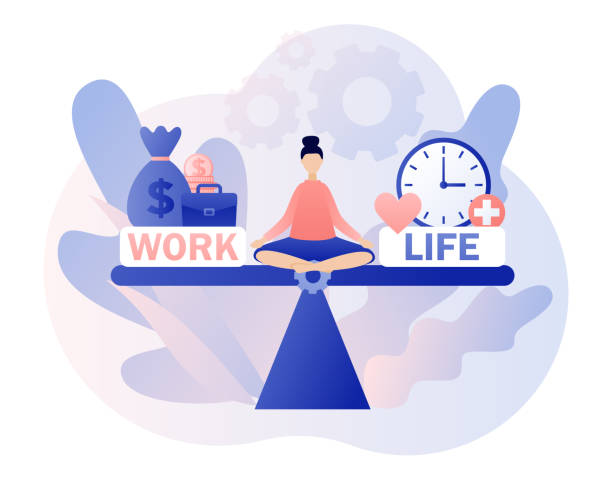
Evening creep is the remote worker's quietest tax. It never announces itself. It's one "quick" email at 9pm, a Slack check during the movie, a half-formed idea you chase at the kitchen table. Each feels harmless. Together they mean your brain never receives the signal that work ended, so it keeps a background process running all night. Tomorrow's focus pays for tonight's leak.
The last pomodoro of the day fixes this by giving the day a deliberate final scene. Spend it on four small acts: check off completed pomodoros against the morning plan, move unfinished tasks to tomorrow's list, write tomorrow's first task in plain words, and close everything work-related. That last step matters most. "Draft the intro for the Henderson proposal" tonight means no cold-start paralysis at 9am.
Then make the ending physical. Close the laptop fully, and if it lives in a shared room, put it away out of sight. Leave the room, or step outside for five minutes to fake a micro-commute home. I've found the ritual feels theatrical for about a week, and then one evening you notice you haven't thought about work since dinner. The day you learn to end work is the day working from home stops meaning living at work.
Frequently Asked Questions
Is the Pomodoro Technique actually good for remote work?
Yes, arguably more than for office work. Remote work's core problem is missing structure, and the Pomodoro Technique is structure in its purest form: fixed sprints, fixed breaks, fixed checkpoints. It replaces the start signals, social pressure, and end-of-day boundaries the office used to provide, using nothing but a timer.
How many pomodoros should I aim for in a remote workday?
Aim for 8 to 12 completed pomodoros, which is 4 to 6 hours of genuinely focused work. That sounds low against an 8-hour day, but with average focus sessions measured at just over 13 minutes (ActivTrak, 2026), 10 clean pomodoros put you far ahead of a typical unstructured day.
What should I do during breaks when I work from home?
Move your body and stay off feeds. Small chores are ideal: shift the laundry, clear a counter, water the plants. They give you physical movement and a finished task, and they don't hook your attention the way social apps do. Save bigger resets, a walk or a proper meal, for the long break after four rounds.
How do I stop Slack from destroying my pomodoros?
Batch it. Snooze notifications during each 25-minute sprint and check messages in the 5-minute breaks, which means you're never more than half an hour from a reply. Pair that with a clear status like "Focus block, back at 10:30" so colleagues know when to expect you instead of wondering where you went.
Should I tell my team I'm using the Pomodoro Technique?
Tell them. A named system reads as organized, not evasive, and it turns your response rhythm into something predictable. Share your heads-down windows and your reachable ones. Many teams end up adopting shared focus blocks once one person demonstrates that a 30-minute reply cadence breaks exactly nothing.
What if 25 minutes feels too short once I'm in flow at home?
Stretch the interval. Home supports longer cycles than open offices ever did; DeskTime's 2021 study found top performers working 112-minute stretches with 26-minute breaks. Try 50/10 as a first step and keep the break sacred. The Pomodoro interval variations guide walks through the main options and when each fits.
Run Tomorrow's First Block
You don't need to overhaul your remote life tonight. You need one clean block tomorrow morning.
Before you close the laptop today, write down tomorrow's first task in plain words. In the morning, skip the inbox, set your status, put the capture list next to your keyboard, and start a single 25-minute sprint with the free Pomodoro timer. No accounts, no setup, just the timer and your one task.
One completed pomodoro before your first Slack check will teach you more about focused remote work than any article can. The walls your office used to provide are gone. Starting tomorrow, you build them out of time.
Put this article into practice
Run your next focus session with our free online Pomodoro timer. No signup, fully adjustable intervals, works right in your browser.